






Who We Are


Guide of the Year


Documents


Charity & SR


Latest Posts


Questions & Answers

Manthali Ramechhap Airport is a domestic airport in eastern Nepal. Its official name is Ramechhap Airport, but most travelers know it as Manthali Airport.
For most international trekkers, Manthali Airport is not a destination by itself. Instead, it appears in their travel plans only because of Lukla.
Lukla’s Tenzing-Hillary Airport is the main gateway for treks to Everest Base Camp, but during peak trekking seasons, flights to Lukla are often shifted from Kathmandu to Manthali.
As a result, anyone planning an Everest trek during spring (March to May) or autumn (September to November) is likely to hear about Manthali Airport early in their research.
Manthali Airport does not serve commercial jet aircraft. It handles small STOL (Short Take-Off and Landing) planes like the Twin Otter and Dornier 228. The airport is managed by the Civil Aviation Authority of Nepal (CAAN).
Category | Details |
Official Name | Ramechhap Airport |
Common Name | Manthali Airport |
IATA / ICAO Code | RHP / VNRC |
Location | Manthali Municipality, Ramechhap District, Bagmati Province, Nepal |
Elevation | 474 meters (1,555 feet) above sea level |
Year Opened | October 1979 |
Runway Length | 530 meters (1,739 feet) |
Runway Surface | Asphalt concrete (upgraded from grass/clay in 2015) |
Aircraft Types | Dornier 228, Twin Otter (STOL aircraft only) |
Parking Apron Capacity | 4 D228-type aircraft |
Airport Authority | Civil Aviation Authority of Nepal (CAAN) |
Flight Time to Lukla | 15–25 minutes |
Airlines Operating | Tara Air, Summit Air, Sita Air |
Peak Season Flights | 50–65 flights daily (weather permitting) |
Kathmandu to Manthali Distance | 132–140 km by road |
Kathmandu to Manthali Travel Time | 4–5 hours by jeep/car |
Peak Seasons | March–May (spring), September–November (autumn) |
Baggage Limit | 10 kg checked + 5 kg carry-on |
Airport Facilities | Basic seating, toilets, small tea stalls; no modern terminal |
Accommodation | Simple lodges near airport; basic rooms, no luxury |
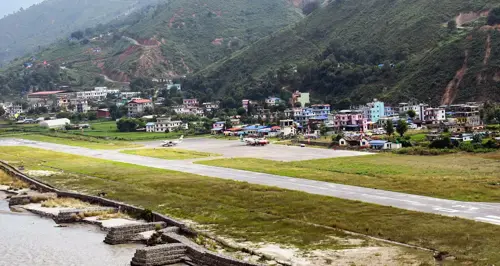
Why Manthali Airport Matters for Everest Trekkers
Manthali Airport matters for Everest Base Camp trekkers because it directly affects how and when they reach Lukla.
During peak trekking months, Tribhuvan International Airport (TIA) in Kathmandu becomes very crowded. Small Lukla-bound aircraft face long delays in taking off due to heavy air traffic. To manage this, CAAN shifts Lukla flights to Manthali Airport. This is a seasonal logistical decision, not a permanent change.
For trekkers, this means:
● During March to May and September to November, your flight to Lukla may depart from Manthali instead of Kathmandu.
● You will need to travel from Kathmandu to Manthali by road before your flight.
● The shift helps reduce delays. Flights from Manthali to Lukla generally experience fewer air traffic delays compared to flights from Kathmandu.
For first-time visitors to Nepal, this can be confusing. Many trekkers book a flight from Kathmandu to Lukla, only to later learn that their departure point has changed to Manthali.
Manthali Airport is located in the Ramechhap District of eastern Nepal. The airport lies within Manthali Municipality, which serves as the district headquarters of Ramechhap .
The airport is situated in Bagmati Province, one of the seven provinces of Nepal. Geographically, it is positioned along the Tamakoshi River valley. This river valley setting means the airport is surrounded by hills on both sides.
Other information regarding the airport:
● Nearest town: Manthali Bazaar is located approximately 15 minutes by road from the airport.
● Nearby highway: The airport is accessible via the Lamosangu-Ramechhap Highway.
● Coordinates: 27°23'38"N, 86°03'41"E
Category | Details |
Official Name | Ramechhap Airport |
Common Name | Manthali Airport |
IATA Code | RHP |
ICAO Code | VNRC |
Elevation | 474 meters (1,555 feet) above sea level |
Year Opened | October 1979 |
Runway Length | 530 meters (1,739 feet) |
Runway Width | 20 meters |
Runway Direction | 03/21 |
Runway Surface | Asphalt Concrete (upgraded from grass/clay in 2015) |
Aircraft Type Supported | Dornier 228, Twin Otter |
Parking Apron Capacity | 4 D228-type aircraft |
Airport Authority | Civil Aviation Authority of Nepal (CAAN) |
Other Things to Note
● At 530 meters, this is a short runway. For comparison, a typical international airport runway is over 3,000 meters. Short runways require specially designed aircraft. This is why Manthali only handles small STOL (Short Take-Off and Landing) planes like the Twin Otter.
● The runway length has a direct impact on baggage limits as lighter planes on short runways mean strictly enforced weight restrictions.
● At 474 meters, Manthali is at a much lower altitude than Lukla (2,860 meters). The climate here is noticeably warmer than in the Everest region.
● Before 2015, the runway had a grass and clay surface. The upgrade to asphalt concrete improved safety and allowed the airport to handle regular commercial flights more reliably.
The road distance from central Kathmandu to Manthali Airport is approximately 132 to 140 kilometers, depending on the exact route taken.
The standard route uses the BP Highway (also called the Banepa–Bardibas Highway). This highway connects Kathmandu Valley to eastern Nepal and passes through Dhulikhel, Banepa and then south toward Bardibas before turning north toward Ramechhap.
Travel time ranges from 4 to 5 hours by private jeep or car . However, this estimate assumes normal traffic and good weather. Actual travel time can vary significantly due to:
● Traffic exiting Kathmandu Valley: The Arniko Highway stretch from Kathmandu to Dhulikhel is often congested, especially in the early morning and evening.
● Road conditions on BP Highway: The BP Highway is a two-lane road with mountain curves. Sections may have potholes, landslide debris (especially during monsoon season) or ongoing repair work. So brace yourself for a little bit of a bumpy ride.
● Seasonal weather: During the monsoon (June–August), heavy rainfall can cause mudslides or flooding on sections of the BP Highway, adding 1–2 hours or forcing detours.
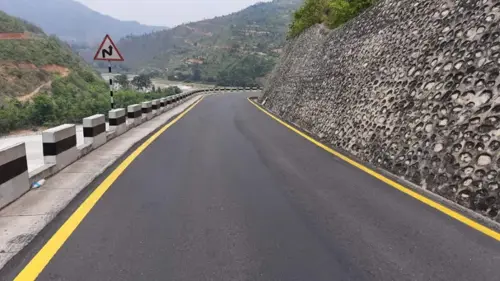
Most Lukla flights from Manthali depart between 6:00 AM and 8:00 AM . This is because weather in the Lukla region is typically calmest in the early morning. To catch a 6:00 AM flight:
● You need to arrive at Manthali Airport at least 1 hour before departure for check-in and baggage weighing.
● Therefore, you must arrive at Manthali Airport by 5:00 AM at the latest.
● With a 4–5 hour drive, you need to leave Kathmandu between 12:00 AM (midnight) and 1:00 AM .
There is no regular scheduled passenger flight from Kathmandu to Manthali . Road transport is the only practical option. Below are the available transport options, compared by cost, comfort, and reliability.
Transport Option | Comfort Level | Reliability | Best For |
Private Jeep | High | High | Groups of 3–7 travelers; those with early morning flights; travelers wanting control over departure time |
Shared Jeep | Medium | Medium | Solo travelers or pairs on a moderate budget; flexible on departure time |
Taxi/Car | Medium | High | Small groups wanting direct service without booking through an agency |
What not to expect: There is no luxury coach service, no train and no regular flight connection. The road journey is functional though. The purpose is to get you from Kathmandu to Manthali Airport in time for your Lukla flight.
Travelers seeking a comfortable journey may find this segment challenging, but it is a standard part of Everest trekking logistics during peak season.
The flight from Manthali to Lukla takes approximately 15 to 25 minutes. This is significantly shorter than flying from Kathmandu to Lukla, which takes about 30 to 40 minutes.
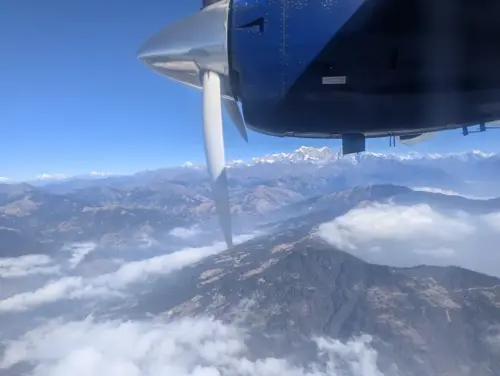
The route flies east-northeast from Manthali, heading toward the Himalayan foothills. The aircraft climbs gradually as it approaches the mountain terrain. For most of the flight, you will see green hills, river valleys, and terraced farmland below. As the flight nears Lukla, the landscape becomes steeper and the mountains appear closer.
The aircraft used on this route are small STOL (Short Takeoff and Landing) aircraft specifically designed for mountain airports. The two main types are the Twin Otter (DHC-6) and the Dornier 228.
Both are twin-engine turboprop planes that can operate on short runways and handle the weather conditions common in Nepal's mountainous regions. These aircraft typically carry between 15 and 19 passengers.
The flight experience is straightforward. You will board the aircraft from the tarmac. There is no pressurized cabin, and the flight cruises at a relatively low altitude compared to commercial jets.
The aircraft can feel small inside, and you may feel some movement from wind or thermal activity, especially near Lukla. This is normal for mountain flying. Pilots on this route are highly experienced with the terrain and weather patterns.
Lukla's Tenzing-Hillary Airport has a runway length of about 530 meters with a significant uphill slope. The approach to Lukla requires the aircraft to descend between hills and line up with the runway in a short distance. This is a standard operation for the pilots who fly this route daily during the season.
Three airlines operate scheduled Lukla flights from Manthali Airport during peak trekking seasons: Tara Air, Summit Air and Sita Air (Online Khabar, 2023).
These flights are seasonal. They operate primarily during spring (March to May) and autumn (September to November), when trekking demand for the Everest region is highest. Outside these months, Manthali Airport may have few or no scheduled Lukla flights, and most Lukla flights resume operating from Kathmandu.
Flights are also weather-dependent. On any given day, departures may be delayed, rescheduled, or cancelled if cloud cover, wind, rain, or low visibility makes flying unsafe. Airlines do not operate flights if conditions do not meet safety requirements.
All three airlines use STOL aircraft suitable for the Lukla runway. Ticket prices and baggage policies are similar across the airlines. During peak mornings, multiple flights depart in sequence, with the first flights typically taking off around 6:00 AM to take advantage of the best weather window.
Flights begin early in the morning, typically around 6:00 AM, and continue until approximately 12:30 PM depending on weather conditions.
Morning departures are preferred because weather in the Himalayan region is generally clearer and more stable in the early hours. As the day progresses, cloud cover and wind can develop, increasing the chance of delays or cancellations.
The best months to fly from Manthali to Lukla are:
● Spring season: March to May
● Autumn season: September to November
During peak periods, airlines operate between 50 to 65 flights daily from Manthali when weather permits .
Outside these seasons, Manthali sees minimal to near-inactive flight operations and direct flights between Kathmandu and Lukla are generally available instead.
Delays are common on this route due to weather dependency. Cloud cover, rain, fog, and high winds can all cause flights to be postponed or cancelled. Airlines do not operate if conditions do not meet safety requirements. Travelers should expect the possibility of same-day delays and plan their itinerary with this in mind.
Lukla flight prices vary based on the departure point, season, and nationality.
For the Ramechhap (Manthali) to Lukla sector, the approximate one-way fares are:
Passenger Type | Approximate One-Way Fare |
International travelers | USD 190 – 225 |
Nepali citizens | NPR 7,500 – 8,500 |
For comparison, Kathmandu to Lukla flights typically cost between USD 180 and 238 one way for international travelers.
Manthali to Lukla tickets cost slightly less than Kathmandu to Lukla because the Manthali route is shorter (15–25 minutes vs. 30–40 minutes).
The above table has an approximate price range which is prone to change. Several factors affect the final ticket price:
● Season: Peak trekking months (March–May, September–November) have higher demand.
● Booking time: Last-minute bookings may face limited availability.
● Airline: Tara Air, Summit Air, and Sita Air have similar but not identical pricing.
● Nationality: Differential pricing applies for Nepali citizens, SAARC nationals, and other international travelers.
Some booking advice
● Book early. Peak season flights sell out quickly. For spring travel (March–May), book by January. For autumn (September–November), book by July or early August. We can help secure your seats well in advance.
● Book through a Nepal-based trekking company, not independently online. Local agencies coordinate directly with airline desks, handle last-minute weather-related changes, and arrange your Kathmandu–Manthali road transfer. If your flight is delayed or cancelled, Trek Me Nepal assists with rebooking, alternatives, and ground communication. Independent third-party bookings often lack this support.
● Ensure passenger details match your passport exactly. Lukla tickets are issued manually through authorized domestic agents and require the full name as it appears on your passport. We check these details during booking to prevent issues at check-in.
● Build buffer days into your itinerary. Weather-related delays are common. Include at least one or two extra days before your return flight. We design trekking itineraries with this buffer built in.
● Reconfirm your flight 48 to 72 hours before departure. Schedules can change based on weather forecasts and CAAN operational decisions. Trek Me Nepal monitors these updates and notifies you directly.
● Book flights and transfers together as a package. With Trek Me Nepal, flight bookings and Kathmandu–Manthali transfers are included. This reduces your logistical burden and gives you local support if disruptions occur.
Lukla flights from Manthali have strict baggage limits because the aircraft are small and the runway at Lukla is short. The standard allowance is:
● Checked baggage: 10 kg per passenger
● Carry-on baggage: 5 kg per passenger
Excess baggage is charged at approximately USD 1 to 2 per extra kilogram, subject to space availability on the aircraft. Airlines may refuse excess baggage if the flight is full.
Baggage is weighed at check-in. Both checked and carry-on bags are counted together for the total weight limit. Trekking duffel bags are preferred over hard-shell suitcases as they are easier to load into small aircraft.
Practical packing advice: Keep your valuables, medications, trekking permits, passport, and one change of clothes in your carry-on bag. If your checked bag is delayed or placed on a later flight, you will still have essential items for the first day of trekking.
Manthali Airport has basic infrastructure. There is no modern terminal building. Facilities include:
● Seating: Limited plastic chairs and benches. During peak hours, seating is insufficient for the number of passengers.
● Toilets: Basic restrooms are available. Carry your own toilet paper and hand sanitizer.
● Food: Small local shops or tea stalls outside the airport sell packaged snacks, biscuits, instant noodles, tea, and bottled water. There is no proper restaurant or cafe inside.
● Crowd levels: During peak season mornings, the airport is very crowded with trekkers, guides, porters, and airline staff. Queues at check-in can be long.
● Waiting area: The waiting area is mostly open or partially covered. There is no air conditioning or heating. In cold mornings, warm clothing is necessary.
● Prepare yourself mentally: The experience at Manthali is functional, not comfortable. You will wait outdoors or in a basic shelter. Flights depart in sequences, and you may wait several hours depending on your flight slot and weather conditions. There are no flight display screens. Announcements are made verbally by airline staff.
● What to bring: Water, snacks, a power bank for your phone, warm layers (for cold mornings), and patience. Do not expect lounges, Wi-Fi, or duty-free shopping.
● The airport is manageable for what it is: a seasonal departure point for mountain flights. Understanding this ahead of time prevents shock or frustration on arrival.
Weather is the main factor affecting Lukla flights from Manthali. The mountain region experiences rapid changes in cloud cover, wind speed, visibility, and rainfall.
Common weather-related delays happen due to:
● Low clouds or fog reducing visibility below safe limits
● High crosswinds at Lukla airport
● Rain affecting runway conditions
● Poor visibility in the mountain corridor
These conditions occur frequently during peak seasons. Airlines do not operate if weather does not meet safety requirements. This is standard procedure for mountain flying and is not specific to any particular airline.
During spring (March–May) and autumn (September–November), delays can happen at times, though most are short (1–3 hours). Full-day cancellations occur less often but are possible, especially when bad weather persists across the region.
Flights scheduled for later in the morning are more likely to be delayed or cancelled than early morning flights, as weather typically deteriorates after 10–11 AM.
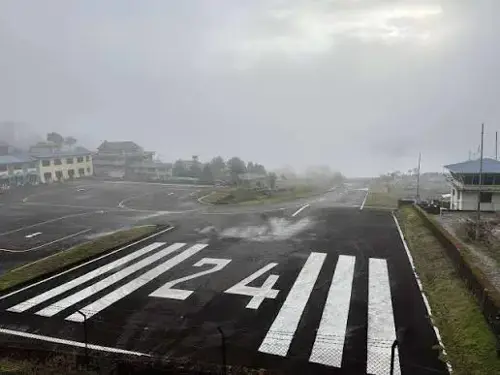
What to Do if Your Lukla Flight is Cancelled
If your flight from Manthali to Lukla is cancelled, here are your options:
Wait for rebooking on the next available flight. Airlines will try to accommodate passengers on subsequent flights when weather improves. On busy days, this may mean waiting several hours or until the next day.
But fear not. Accommodation is available for you here. While the area surrounding the airport has some basic tea houses, if you wish to stay overnight, we can travel about half an hour to an hour further for more comfortable hotels.
Return to Kathmandu and try again later. Some travelers choose to drive back to Kathmandu and wait for better weather or attempt a different departure date. This adds travel time and cost.
Take a helicopter to Lukla. Helicopters can sometimes fly when small planes cannot, as they handle weather differently and have more flexible routes. So if you are more tight on time, this could be the option for you.
Helicopter charters are significantly more expensive than fixed-wing flights. Seats on shared helicopters may be available through local operators.
Adjust your trekking itinerary. If the delay is one day, you can shorten later trekking days or skip acclimatization stops. If the delay is longer, you may need to reduce the overall trek distance.
Buffer days are essential. Trekking itineraries for Everest Base Camp should include at least one or two extra days before the scheduled return flight from Lukla to Kathmandu (or Manthali). These buffer days allow you to absorb a weather delay without missing your international flight home.
Local support matters. If you are trekking with a Nepal-based company, they will monitor flight status, communicate with airline desks, arrange alternate transport if needed, and coordinate with your trekking guide. Independent travelers must handle these tasks themselves without local ground support.
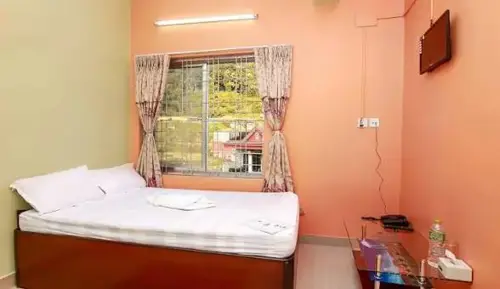
Accommodation near Manthali Airport is basic and limited. Do not expect luxury hotels or resorts.
What is available:
● Simple lodges and small local hotels within walking distance or a short drive from the airport
● Rooms typically have a bed, basic mattress, pillow, blanket, and attached toilet with cold or lukewarm water
● Some lodges offer tea, coffee, or simple meals (dal bhat, noodles, eggs, toast)
What to expect:
● No high-end amenities, room service, or heating
● Cleanliness varies; carrying a sleeping bag liner or your own towel is practical
● Power outages may occur; bring a headlamp or torch
● Booking in advance is recommended during peak season, as rooms fill up with trekkers who arrive the night before early morning flights
Convenience and proximity to the airport are the main reasons to stay here, not comfort. Most travelers stay only for one night before their morning flight to Lukla.
If you prefer better facilities, consider staying in Kathmandu and driving overnight to Manthali (leaving around 1:00–2:00 AM) to reach the airport by 6:00 AM. This avoids overnighting in Manthali but requires a very early start.
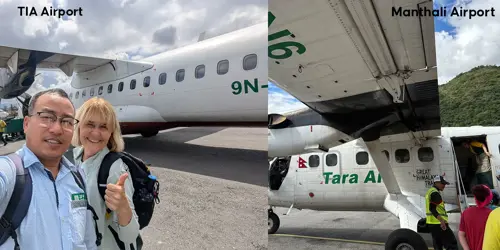
Factor | Kathmandu (TIA) | Manthali (RHP) |
Flight time to Lukla | 30–40 minutes | 15–25 minutes |
Road travel required | No | Yes, 4–5 hours from Kathmandu |
Overnight stay needed | No | Often yes, in basic lodge |
Airport facilities | Full terminal, seating, restaurants | Minimal, limited seating, basic toilets |
Congestion level during peak season | High – causes delays | Low – dedicated Lukla operations |
Flight reliability during peak season | Lower | Higher |
Comfort level | High | Low |
Best for | Off-season travel, travelers who prioritize comfort | Peak-season trekkers who prioritize reaching Lukla |
In simple terms: Kathmandu is more comfortable but less reliable during busy trekking months. Manthali requires extra road travel but often offers better flight reliability.
Suitable for Manthali Airport | Not preferred for Manthali Airport |
Everest Base Camp trekkers traveling during peak season (March–May, September–November). Most Lukla flights operate from Manthali during these months, so using Manthali is not optional. | Travelers with very tight schedules who cannot add 4–5 hours of road travel each way or an overnight stay near the airport. |
Peak season travelers who want to reach Lukla with fewer weather and congestion-related delays. | Those who expect high comfort levels and are not willing to stay in basic lodges or sit in minimal airport facilities. |
Guided trek clients whose trekking company handles road transfers, flight bookings, and logistics. The company manages the early morning drive or overnight stay. | Off-season travelers (winter, monsoon). During these months, Lukla flights typically operate from Kathmandu directly, and Manthali has minimal or no flight activity. |
Travelers with buffer days who can absorb the extra road travel time and possible overnight stay without stress. |
|
Based on Trek Me Nepal's experience operating Everest Base Camp treks, here is practical advice for first-time travelers using Manthali Airport.
1. Leave Kathmandu between midnight and 1:00 AM.
Do not negotiate this. Morning flights depart at 6:00–7:00 AM. You need to be at Manthali Airport by 5:00 AM. A 4–5 hour drive means leaving before 1:00 AM.
2. Book your road transfer in advance.
Do not arrive at your Kathmandu hotel and expect to find a jeep at midnight. Your trekking agency will arrange this. If booking independently, arrange through a transport company before your travel dates.
3. Keep Nepali Rupees in small denominations.
You will need cash for snacks, water, toilet fees (if any), and tips. ATMs near Manthali Airport are unreliable or non-existent.
4. Buy a local SIM card (Ncell or NTC) at Kathmandu airport.
Mobile data works intermittently at Manthali but is better than no connection. You will need it for communication if flights are delayed.
5. Keep your power bank fully charged.
Charging points at Manthali Airport are extremely limited. Your phone is your lifeline for updates, communication with your agency, and entertainment during long waits.
6. Carry snacks and water.
The food kiosks at Manthali sell only basic items (chips, biscuits, instant noodles, tea). Do not rely on them for a proper meal.
7. Add buffer days before your trek starts.
A minimum of 2 buffer days in Kathmandu before your scheduled Lukla flight is standard. Without buffer days, a weather cancellation can end your trek before it begins.
8. Do not schedule international flights on the same day you return from Lukla.
Return flights are equally affected by weather. Always stay one night in Kathmandu after your Lukla–Manthali flight before flying out of Nepal.
9. Weigh your bags before leaving your hotel.
The 15 kg total limit (10 kg checked + 5 kg carry-on) is strictly enforced. Excess baggage fees are charged, or bags are refused entirely.
10. Trust your trekking agency's local knowledge.
Agencies like Trek Me Nepal handle cancellations, rebooking, and alternative arrangements daily. If a flight is cancelled, they will coordinate with airlines and arrange accommodation or next-day flights. Independent travelers face the same queues without local support.
Q: How to fly to Lukla from Nepal?
During peak trekking seasons (March–May, September–November), you fly from Manthali Airport (RHP) to Lukla (LUA). During off-season, flights depart from Kathmandu (TIA). The flight takes 15–25 minutes from Manthali or 30–40 minutes from Kathmandu.
Q: Where do flights to Lukla depart from during peak season?
From Manthali Airport (Ramechhap Airport), approximately 132 km east of Kathmandu. This is a seasonal operational decision by the Civil Aviation Authority of Nepal to reduce congestion at Kathmandu's Tribhuvan International Airport.
Q: Why fly to Lukla via Manthali?
To avoid long delays at Kathmandu Airport. During peak months, Kathmandu's single runway becomes overcrowded with international jets. Small Lukla-bound planes face hours of delay. Moving these flights to Manthali allows them to depart on schedule.
Q: Is Manthali better than Kathmandu for Lukla flights?
For reliability during peak season, yes. Flights from Manthali experience fewer air traffic delays. However, you must add a 4–5 hour road journey from Kathmandu. For comfort, Kathmandu is better. For getting to Lukla on time during spring or autumn, Manthali is the more reliable option.
Q: How long is the flight from Manthali to Lukla?
Approximately 15 to 25 minutes.
Q: Can I fly direct from Kathmandu to Lukla?
Direct flights from Kathmandu to Lukla exist, but during peak season (March–May, September–November), these flights are shifted to Manthali. Your ticket may say "Kathmandu to Lukla," but the actual departure point will be Manthali. Check with your airline or trekking agency for your specific travel dates.
Q: What airport do Everest Base Camp flights use?
During peak trekking seasons, flights use Manthali Airport (Ramechhap Airport). During off-season, flights use Tribhuvan International Airport (Kathmandu). The destination is always Lukla Airport (Tenzing-Hillary Airport).
Q: Is Manthali Airport operational year-round?
The airport is physically operational year-round, but scheduled Lukla flights operate only during peak trekking seasons (March–May and September–November). Outside these months, flights may operate from Kathmandu, or frequency drops to near zero.
Q: What happens if my Lukla flight is cancelled due to weather?
You have three options: (1) Wait for rebooking on the next available flight (usually the next day), (2) Arrange a helicopter charter (more expensive but may fly when fixed-wing flights cannot), or (3) Cancel your trek if buffer days are exhausted. Your trekking agency will guide you through rebooking.
Q: Can I stay overnight in Manthali before my flight?
Yes. Basic lodges and guesthouses are available in Manthali Bazaar, approximately 15 minutes from the airport. For more comfortable accommodation, we could drive a little further. This avoids the midnight departure from Kathmandu. Your trekking agency can arrange this.
Q: Do I need to reconfirm my Lukla flight?
Yes. Reconfirmation 48–72 hours before departure is standard practice. Your trekking agency or airline will advise you on reconfirmation procedures.
Q: What documents do I need for the Lukla flight?
Your passport (original, not a copy) and your flight ticket (printed or on your phone). The name on your ticket must exactly match your passport.
References
Online Khabar. (2023, September 25). Manthali-Lukla flights in operation. Online Khabar. https://english.onlinekhabar.com/manthali-lukla-flights-operation.html
Check out recent travel trends and news by Trek me Nepal


More Reasons Why Travellers Trust Us








Bipin Thapa Magar
Guide of the Year | Operations Manager & Chief Planner | Trek Me NepalBipin Thapa Magar is a highly experienced trekking and expedition professional with over 20 years in Nepal’s adventure tourism industry. He began his journey in 2004 as a porter and gradually advanced... Read More