






Who We Are


Guide of the Year


Documents


Charity & SR


Latest Posts


Questions & Answers
The Everest region is a remote area in Nepal's Himalayas, with rugged terrain and Sherpa villages. The Everest Base Camp trek route begins in Lukla and passes through settlements like Phakding, Namche Bazaar, Tengboche, Dingboche, Lobuche, and Gorakshep, reaching elevations over 4,000 meters before arriving at Everest Base Camp.
Toilet facilities during the Everest Base Camp trek vary by altitude. At lower elevations, such as Lukla and Namche Bazaar, teahouses often provide Western-style flush toilets with running water and septic tanks. These are similar to basic sit-down toilets found in urban areas.
As the trek ascends above 3,000 to 4,000 meters, facilities shift to squat toilets, which consist of a pit or hole with foot placements and a bucket of water for manual flushing.
These are more common in places like Tengboche, Dingboche, Lobuche, and Gorakshep because they are easier to maintain in cold conditions where pipes can freeze. Most toilets in teahouses are shared among guests and located in separate blocks outside the main building.
Public toilets exist in major villages like Namche Bazaar and Tengboche, but they may require a small fee of NPR 50-100 for non-guests. At Everest Base Camp itself, there are no permanent facilities; trekkers use temporary portable toilet tents during the climbing season or return to Gorak Shep.
Environmental responsibility is part of Everest Base Camp sanitation practices. The region falls within Sagarmatha National Park, which has regulations for waste management to prevent contamination of water sources and trails.
Trekkers should use designated toilets to avoid open defecation, follow Leave No Trace principles by packing out non-biodegradable waste like toilet paper in sealable bags, and dispose of it properly at lodges or lower villages. Initiatives like sealed pit systems and eco-toilets help reduce environmental impact from human waste.
| Aspect | Key Details |
| Primary Toilet Types | Squat Toilets: Most common above 3,000m. Hole in floor, bucket-water flush. Western Toilets: Available in Lukla & Namche. Seated, may flush. Pit/Bucket Toilets: Common in public areas & high teahouses. Composting/Eco-Toilets: Found in some lodges; wag bags used at EBC. |
| Availability by Altitude | Low (Lukla - Namche): Western-style in teahouses, public pay-to-use toilets. Mid (Tengboche - Dingboche): Mix of Western & squat; shift to bucket flushes. High (Lobuche - Gorakshep): Almost exclusively basic squat/pit toilets. Everest Base Camp: No permanent facilities. Portable tents or return to Gorakshep. |
| Winter Conditions (Nov-Feb) | Pipes freeze, rendering Western toilets non-functional. Squat toilets remain usable but are icy. Water for flushing is extremely limited. Night-time visits are very cold and dark. Some lodges may be closed. |
| Essential Hygiene Kit | Non-Negotiable: Toilet paper, hand sanitizer, headlamp, sealable waste bags. Highly Recommended: Biodegradable wet wipes, small pack of tissues, personal towel. For Women: Menstrual products, intimate wipes, extra sealable bags. |
| Top Health & Safety Tips | 1) Wash hands with sanitizer after every toilet visit. 2) Dispose of toilet paper in bins, never in the toilet. 3) Use a headlamp for night visits to dark, outdoor blocks. 4) Stay hydrated, but reduce liquids 2 hours before bed. 5) Follow Leave No Trace: pack out what you pack in. |
| Environmental Rule | Sagarmatha National Park mandates waste management. Use designated toilets. All non-biodegradable waste (toilet paper, wipes, hygiene products) must be packed out from high altitudes. |
Everest Base Camp hygiene is essential for trekkers to stay healthy and avoid issues like gastrointestinal illnesses, traveler's diarrhea, dehydration, and infections, which can worsen quickly in remote areas with limited medical access.
At high altitudes, the body is under stress from low oxygen levels, making it more susceptible to health problems if sanitation is poor. Proper hygiene, such as washing hands before meals and after using toilets, helps prevent the spread of bacteria in shared facilities.
Sanitation challenges increase with elevation. Water scarcity and freezing temperatures cause pipes to freeze, leading to non-functioning flush systems and reliance on bucket flushes. Toilets can become dirty or odorous from heavy use by multiple trekkers, especially in peak seasons.
Limited electricity and resources mean cleaning is done daily but may not meet urban standards. Trekkers should carry personal items like toilet paper, hand sanitizer, wet wipes, and biodegradable soap, as these are rarely provided. Maintaining hygiene with these supplies reduces risks and supports overall well-being during the trek.
| Type | Description | Common Locations | Pros | Cons |
| Squat | Hole in floor. Bucket-water flush. Paper in bin. | Higher villages: Lobuche, Gorakshep. | Saves water, works frozen. | Physical effort, basic. |
| Western | Seated, may flush. | Lower areas: Lukla, Namche Bazaar. | Familiar, comfortable. | Rare/freezes at high altitude. |
| Pit | Deep hole in the ground. | Public facilities (e.g., Namche). | Simple, low-cost. | Odor, hygiene concerns. |
| Bucket Flush | Seat over the container. Manual water pour. | High teahouses & camps. | Works with little/no plumbing. | Manual, needs emptying. |
| Composting/Eco | Natural breakdown or pack-out system (wag bags). | Some teahouses, EBC, high camps. | Eco-friendly, sustainable. | Less common, requires user care. |
Squat toilets on Everest Base Camp trek are common, especially at higher elevations. These consist of a hole in the ground or a platform with foot placements on either side, requiring users to squat over the opening.
They do not have automated flushing; instead, a bucket of water and a mug are used for manual cleaning after use. Toilet paper or wipes must be disposed of in a provided bin rather than flushed to prevent blockages.
Examples include facilities in teahouses at Lobuche, where basic squat toilets are standard due to water scarcity, and at Gorakshep, where they are located in separate blocks and may freeze in cold weather, limiting functionality. In Tengboche and Dingboche, squat toilets appear as the trek ascends, often shared among guests.
Western toilets on EBC trek are seated commodes with a bowl and, in some cases, a flushing system connected to septic tanks. These are more familiar to many trekkers and allow for sitting rather than squatting.
They are primarily available in lower-altitude areas, such as teahouses in Lukla, Phakding, and Namche Bazaar, where running water supports flushing. Some lodges in Tengboche and Dingboche also offer Western-style options, but they become unreliable higher up due to frozen pipes.
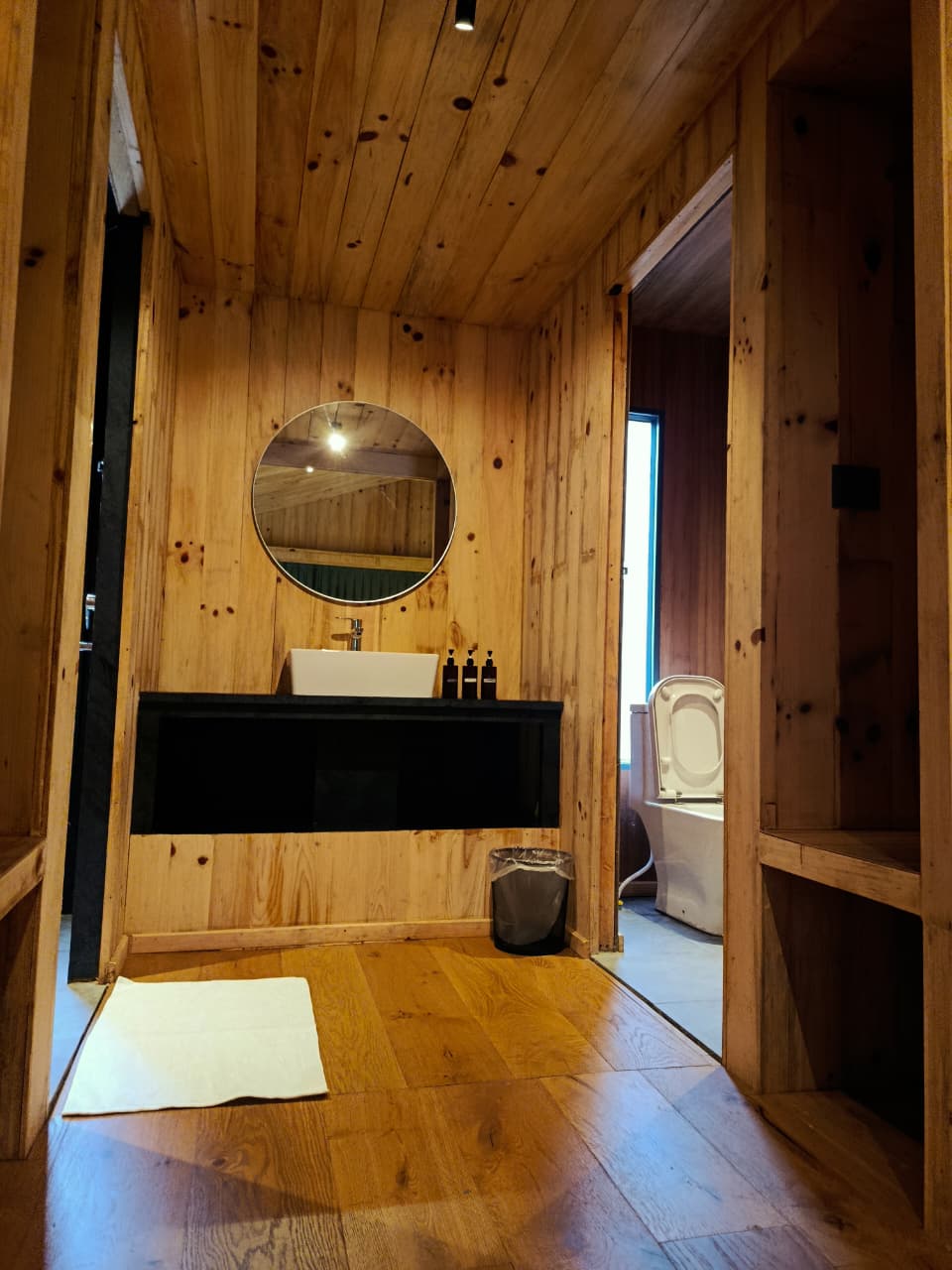
Squat and Western toilets differ in design and use: squat toilets involve a standing position with feet on platforms, promoting no direct contact with surfaces for better hygiene, while Western toilets provide a seat for comfort but may involve more surface contact.
Advantages of squat toilets include water efficiency in scarce high-altitude environments and simpler maintenance without complex plumbing, which reduces issues in freezing conditions.
Disadvantages include the physical effort required for squatting, which can be challenging at high altitudes with fatigue or balance issues.
Western toilets offer ease of use and familiarity, especially for those with mobility concerns, but they consume more water and are prone to malfunctions from cold temperatures, making them less practical above 4,000 meters.
Pit toilets in Everest region are basic systems with a deep hole dug into the ground, often under a wooden platform or as part of a squat setup. These collect waste directly in the pit and are maintained by replacing liners or disinfecting regularly.
They are found in public facilities in settlements like Namche Bazaar, Tengboche, Dingboche, and Gorakshep, supported by local communities or NGOs to minimize open defecation.
At Everest Base Camp, pit toilets may be temporary for expeditions, dug into the moraine, though they are less common now due to environmental regulations. Advantages include simplicity and low cost, but disadvantages involve potential odors, limited hygiene, and environmental risks if not properly sealed.
Bucket flush toilets use a container or barrel under a seat or hole, where users pour water from a bucket to clean after use, without automated plumbing. These are common in teahouses at higher altitudes, such as Tengboche, Dingboche, Lobuche, and Gorakshep, where water shortages make full flushing impractical.
In expedition camps like Camp I and Camp II beyond Base Camp, bucket systems in tents collect waste in lined containers for later removal. Advantages are their functionality in cold, water-limited areas and ease of setup, while disadvantages include manual effort for flushing and the need for regular emptying to maintain cleanliness.
Composting toilets on the Everest trek, also known as eco-toilets, break down waste naturally using materials like sawdust or peat to aid decomposition and reduce odors.
These are implemented in some teahouses and public areas in popular villages within Sagarmatha National Park, such as sealed pit systems or eco-toilets that contain waste for controlled breakdown.
Examples include facilities in Namche Bazaar and Dingboche, where they help manage high traffic. At higher camps, eco-friendly approaches extend to wag bags, sealed, absorbent bags for packing out waste, which are used at Everest Base Camp and beyond, like Camp III and Camp IV, to prevent pollution on glaciers.
Eco-friendly toilets used in high-altitude regions focus on sustainable waste management, such as sealed containers or systems that allow waste to be transported to lower elevations for disposal in Gorakshep or Kathmandu.
Advantages include reduced environmental impact, compliance with park regulations, and lower contamination of water sources. Disadvantages can involve higher setup costs and the need for trekkers to follow strict protocols, like using biodegradable products and carrying waste bags.
| Location/Altitude Range | Type of Toilet | Availability Notes |
| Lukla – Namche Bazaar (~2,800m – 3,440m) | Western-style flush toilets in teahouses. Public pay-per-use toilets in villages. | Easily available at teahouses. Public toilets cost NPR 50–100. |
| Namche – Tengboche (~3,440m – 3,870m) | Mix of Western & squat toilets. Shift toward bucket-flush systems. | Still fairly accessible at teahouses. Squats become more common. |
| Dingboche – Lobuche (~4,410m – 4,910m) | Mostly squat toilets with bucket flush. Few Western options. | Available only at overnight teahouses. Water may be frozen. |
| Gorakshep (5,164m) | Basic squat/pit toilets only. | Last toilet stop before EBC. Shared, often cold/dark. |
| Everest Base Camp (5,364m) | No permanent toilets. Portable tents during climbing season. | Day trekkers must return to Gorakshep. Expeditions use wag bags/barrels. |
| On Trail (between stops) | No facilities. | Use nature respectfully (far from trail/water). Carry TP & waste bag. |
Toilet availability along the Everest Base Camp route depends on teahouses and lodges, which serve as the main stops for overnight stays and breaks. Teahouse toilets are present in every lodge where trekkers stay, providing basic restroom access.
In lower sections of the trail, such as from Lukla to Phakding and up to Namche Bazaar, teahouses offer Western-style flush toilets connected to septic tanks. These are located inside the lodge or in a separate block nearby and are cleaned daily.
As the trek progresses, facilities at teahouses become simpler, with squat toilets using a bucket for manual flushing. For example, in Tengboche and Dingboche, some teahouses still have Western-style options, but water shortages can limit flushing.
At higher points like Lobuche and Gorakshep, teahouse toilets are basic squat types in small structures, often affected by freezing temperatures.
Trekkers can access these by staying at the lodge or asking permission during breaks, though they should expect shared use and carry their own toilet paper and hand sanitizer, as these are not provided.
Public toilets in Lukla and Namche Bazaar are readily available as they are major settlements in the Everest Region. In Lukla, public facilities include basic structures at the airport area and village points, often requiring a small fee for non-guests.
Namche Bazaar has public toilets supported by local communities or trekking associations, typically pit-style or semi-modern with waste containment.
These are located near checkpoints or central areas and are pay-to-use for maintenance. Public toilets in settlements provide an option outside of teahouses, but they are limited and may lack running water or supplies.
For instance, between Lukla and Phakding, there is at least one public toilet along the path, and in Phakding to Namche, two more are available at places like Jorsale and Monjo.
Trekkers can locate them by asking locals or guides, as signage may be minimal, and use them during lunch stops or village visits to prepare for sections without facilities.
Shared toilets in teahouses are the standard option along the Everest Base Camp, serving multiple guests from the same lodge. Thesecan be in a detached block outside the main building, with one or two toilets per floor or group of rooms, leading to potential waits during peak times.
Shared facilities are free for overnight guests but can become dirty from high usage, so trekkers should use them early in the morning when they are cleaner.
Private toilet facilities are available only in luxury lodges or packages, such as attached bathrooms in select accommodations in Namche Bazaar or Dingboche, often with Western-style flush systems. These require extra payment and are not common at higher altitudes.
Shared vs private toilets vary by budget; standard treks rely on shared ones, while luxury options offer more comfort in lower areas. To mentally prepare, trekkers should note that shared facilities promote hygiene through daily cleaning, but personal supplies like wet wipes are essential.
Toilet facilities above Namche Bazaar shift to more basic setups due to elevation and cold conditions. In Tengboche, toilets are available at teahouses with some modern options, but from Dingboche onward, facilities are predominantly squat toilets in teahouses, with bucket flushes that may not work if water freezes.
The toilet situation at Lobuche involves basic pit toilets in lodge, possibly with no running water and reliance on hot water provided by owners to keep them functional.
Toilets in Gorakshep are limited to squat types in teahouses, shared among many trekkers, and prone to freezing pipes, making them unreliable at night. At higher camps like Everest Base Camp, there are no permanent toilets; portable toilet tents or pit systems are set up seasonally for expeditions, but day trekkers must return to Gorakshep.
Toilets between teahouses on EBC trek sections above Namche, such as Namche Bazaar to Tengboche or Dingboche to Lobuche, are scarce, with gaps of two to three hours without access, trekkers may need to use nature behind rocks or bushes, far from trails and water sources, while following Leave No Trace principles
Tips for locating them include planning breaks at teahouses before departing, coordinating with guides for emergency stops, and carrying a headlamp for nighttime visits to outdoor facilities. This setup helps trekkers prepare for reduced comfort at high altitudes.
Winter toilet conditions on Everest Base Camp trek can be difficult because of temperatures below freezing, which cause pipes to freeze and eliminate running water in teahouse facilities.
This leads to non-functioning western toilets in winter EBC and reliance on bucket flush systems, where water must be manually poured for cleaning.
In higher areas like Tengboche, Dingboche, Lobuche, and Gorakshep, frozen squat platforms and cold toilet seats at high altitude make surfaces slippery and uncomfortable, increasing the risk of slips.
Some lodges may close entirely in winter due to these issues, and water scarcity requires hauling from distant sources, resulting in inefficient flushing and stronger odors from heavy use.
Squat toilets are better in winter trekking because they require less plumbing and are easier to maintain in cold temperatures. Using squat toilets in cold temperatures can be challenging due to the chill on floors, but they remain functional without pipes that freeze.
Some practical tips you can follow are wearing insulated clothing like warm socks or layers to stay comfortable during visits, and bringing a small trowel for emergencies if facilities are unavailable.
Trekkers report that in cold conditions, toilets become dirtier by evening from multiple uses, leading to hygiene concerns.
It can be even more difficult to access toilet in the night-time because of the dark, unlit paths to outdoor facilities and freezing temperatures that make visits uncomfortable. In high-altitude lodges, toilets are often in separate blocks without lighting, requiring navigation in low visibility.
Frozen conditions can make doors or latches stiff, and the cold discourages frequent trips. Practical tips for safety include bringing a headlamp for night toilet visits to illuminate the area and prevent accidents, and limiting water intake before bed to reduce the need for nighttime use.
Trekkers' experiences indicate that 90% carry wet wipes for quick cleaning during these visits, as water may be frozen or limited.
Altitude-induced toilet difficulties include increased urgency from hydration needs at high elevations, combined with fatigue, dizziness, or altitude sickness that impair balance while squatting.
Above 4,000 meters, facilities are basic squat toilets with limited water, making them unreliable due to frozen pipes and shared use, which heightens risks of gastrointestinal illnesses like traveler's diarrhea from poor sanitation.
At Everest Base Camp, no permanent toilets exist, relying on portable tents or pits, but day trekkers must use Gorakshep's basic setups. Cold-weather sanitation challenges exacerbate these issues, as water shortages limit cleaning.
Trekkers could practice using squat toilets before winter trek to build leg strength and comfort, using trekking poles or walls for support if dizzy, and carrying hand sanitizer and biodegradable wipes for hygiene with limited water.
Trekkers describe the experience as awkward initially, especially for those unfamiliar with squat positions, but it becomes manageable with preparation, noting that no seat contact in squats improves hygiene at altitude.
| Concern | What to Do | What to Pack |
| Hand Hygiene | Wash with soap/water or use sanitizer after every toilet visit & before eating. | Hand sanitizer, biodegradable soap, small towel. |
| Toilet Paper & Wipes | Dispose of all used paper/wipes in bins, never in the toilet. | Your own TP, biodegradable wipes, sealable waste bags. |
| Avoiding Illness | Drink only treated/boiled water. Eat hot, cooked foods. | Water filter/purification tablets, rehydration salts. |
| Managing Water Scarcity | Use minimal water for washing. Wipes are key when water is frozen. | Biodegradable wipes, small water bottle for rinsing. |
| Night & Cold Visits | Limit drinks before bed. Use headlamp. Dress warmly. | Headlamp, easy-to-remove layers, warm socks. |
| Women’s Hygiene | Pack out all sanitary products in sealable bags. | Sanitary supplies, intimate wipes, extra zip bags. |
Hand hygiene during Everest trekking is a key part of toilet hygiene on Everest Base Camp trek to reduce the spread of germs in shared facilities. Trekkers should wash hands after every toilet use and before eating to prevent infections.
Step-by-step guidance:
Traveler health and hygiene at high altitude relies on consistent practices, as limited medical facilities make prevention essential.
Preventing illness through proper sanitation helps avoid stomach problems on EBC trek, such as traveler diarrhea, which can result from contaminated water or poor hygiene.
To stay healthy on long trekking days, drink only treated water (boiled, filtered, or purified with tablets) and avoid uncooked foods or unpeeled fruits.
Step-by-step prevention:
Using biodegradable wipes and hand sanitizer supports sanitation with limited water supply, especially in high-altitude areas where running water is scarce.
Biodegradable wipes are useful for personal cleaning after toilet use; select those that break down naturally to comply with environmental rules.
Step-by-step use:
These items are essentials since facilities rarely provide them. For added comfort in public squat toilets, apply a small amount of hand sanitizer around the rim for psychological reassurance, though it does not replace thorough cleaning.
Managing hygiene with limited water is common on the EBC trek, as sources freeze or are rationed above Namche Bazaar. Cold-weather hygiene practices include conserving water for essential uses like hand washing.
Step-by-step tips:
These actionable steps help maintain health throughout the trek, reducing risks from limited resources.
Toilet facilities for women on EBC trek might have challenges with privacy due to shared and basic setups in teahouses and along the trail. Privacy concerns for women trekkers increase at higher altitudes, where barren landscapes and fewer settlements make finding discreet spots difficult, often requiring use of exposed areas or bushes far from paths and water sources to avoid environmental impact.
In lower areas like Lukla and Namche Bazaar, facilities include Western-style toilets with some enclosure, but above 4,000 meters, squat toilets in outhouses are common, which are unisex and offer limited barriers, leading to waits of up to 30 minutes during peak times and potential discomfort from group exposure.
Privacy issues can also arise during day hikes, with urination challenges for women during day hikes due to sparse vegetation and the need to maintain distance from the group.
Trekkers can use wet wipes and dry shampoo for overall freshness without daily bathing, as cold conditions raise the risk of illness.
You can wear adjustable layers like pants with zippers for easy access, limiting hot drinks after a certain time to reduce nighttime trips in freezing unheated bathrooms, and using a female urination device like a Shewee to urinate standing while facing away from others, which helps with balance and reduces squatting effort when fatigued.
For added discretion, coordinate with group members or guides to look away during stops, and use a pee cloth like Kula Cloth, which is antimicrobial and folds discreetly, to eliminate the need for drip drying in cold weather.
Managing menstruation on Everest Base Camp trek requires planning for potential irregularities caused by high altitude and physical stress, such as periods starting unexpectedly, becoming heavier, lasting longer, or stopping altogether.
Feminine hygiene disposal in remote trekking areas involves carrying used products like pads or tampons in sealable, biodegradable waste bags, as teahouse bins may not be suitable, and flushing them risks blocking basic plumbing; dispose of them at lower villages or in Kathmandu where proper waste management is available.
Menstruation disposal tips include packing extras in a daypack rather than the duffel bag carried by porters, along with intimate wipes, a hot water bottle for cramps, and painkillers.
At high altitudes, increased hydration of at least 3 liters daily can heighten urgency, so request multiple daytime breaks from the trekking leader, who can arrange access to lodges or bush areas in emergencies.
If using altitude medications like Diamox, note possible interactions with menstrual symptoms, and consult a doctor pre-trek. Opt for biodegradable products to align with Sagarmatha National Park regulations, and inform guides of needs for better facilitation during the trek.
Women-only toilet facilities are not standard on the EBC trek, with most teahouses providing communal, unisex toilets for efficiency in remote settings. In some luxury lodges in Namche Bazaar or Dingboche, separate or attached bathrooms may be available upon request at extra cost, offering more privacy for changing or hygiene needs, but this is rare and unavailable at higher altitudes like Gorakshep.
At Everest Base Camp, portable toilet tents set up by trekking companies provide basic privacy but are not gender-specific. In the absence of women-only spaces, coordinate with female group members for mutual privacy during busy times, confirming options with guides or lodge owners in advance, and using personal sanitary wipes for quick, discreet maintenance in shared facilities.
| Rule/Practice | What It Means | What Trekkers Must Do |
| Use Designated Toilets | Concentrates waste, prevents contamination of soil & water sources. | Always use teahouse or public toilets. Avoid open defecation. |
| Pack Out Non-Biodegradables | Toilet paper, wipes, and hygiene products do not decompose at high altitude. | Carry sealable waste bags. Pack out all used paper/wipes and dispose in lower villages/Kathmandu. |
| Follow Leave No Trace | Minimize impact on fragile alpine environments. | If no toilet is available, go far from trails & water, dig a small hole if possible, and cover completely. |
| Respect Park Regulations | Sagarmatha National Park requires waste management; fines may apply. | Use provided waste bags (e.g., wag bags) above Base Camp. Support clean-up initiatives. |
| Choose Biodegradable Products | Redces long-term environmental harm if items are accidentally left behind. | Use biodegradable soap, wipes, and toilet paper when possible. |
| Dispose of Human Waste Properly | Waste does not decompose in freezing temperatures and can pollute water sources. | At high camps/EBC, use provided barrel toilets or wag bags. Do not leave waste on the mountain. |
Eco-friendly toilet practices on EBC trek involve using systems that minimize environmental impact, such as barrel toilets at Everest Base Camp where waste is collected in liners or bags for later removal.
These include portable cabin or box toilets and wag bags (sealed, absorbent bags with chemicals to solidify waste and reduce odor) which are mandatory above Base Camp.
Trekkers should use biodegradable wet wipes and toilet paper, disposing of them in provided bins rather than flushing to prevent blockages in basic plumbing.
At higher camps, eco-toilet initiatives include portable incinerator toilets that burn waste to ash and filtered urinals for off-grid use, though these face logistical challenges in extreme cold.
Use pee bottles or urine funnels inside tents at Camp IV to manage urination without leaving waste exposed, and double-bagging solid waste for transport down. Trekkers can reduce impact by selecting operators that provide waste bags and train guides in sustainable practices.
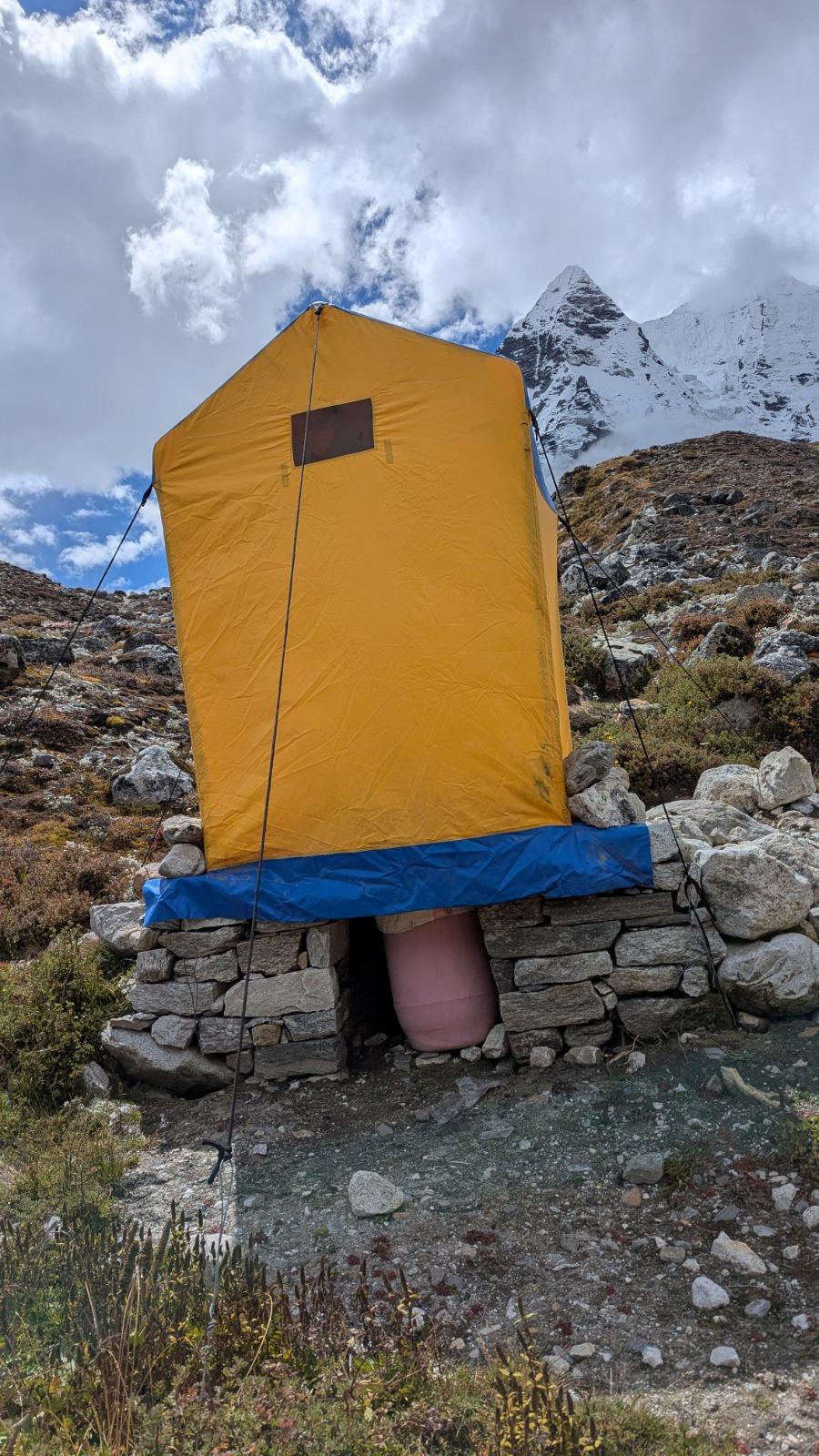
This is a temporary high-altitude toilet facility near the Island Peak route in the Everest region. Built with a sturdy stone base and a weather-resistant tent cover, such toilets are commonly used above the tree line where permanent infrastructure is impossible.
These basic yet essential facilities help trekkers manage sanitation responsibly in remote Himalayan terrain, highlighting the challenges of maintaining hygiene during the Everest Base Camp trek.
Leave No Trace principles for toilet use emphasize minimizing environmental footprint by using established facilities at teahouses and lodges to concentrate waste, rather than scattering it along trails.
When facilities are unavailable, such as between villages or at high altitudes, trekkers should carry biodegradable waste bags to pack out toilet paper and other non-biodegradable waste, or use a small trowel to dig a hole for burial, covering it afterward.
This includes staying far from water sources and trails to prevent contamination. Responsible trekking, like Trek Me Nepal, companies incorporate these principles by ensuring proper disposal and educating participants.
Carry out all solid waste from higher camps using wag bags and not abandoning equipment or waste. Trekkers should avoid synthetic gear that contributes to microplastics in snow and streams.
Human waste management in Everest region is critical as waste does not decompose in freezing temperatures, leading to accumulation and pathogens like C. difficile in ice cores.
At Everest Base Camp, temporary barrel systems collect about 14 tons of waste per season, hauled down for disposal, while above Base Camp, areas like South Col become open toilets with waste scattered by wind.
At Camps I and II, bucket or wag-bag systems in tents seal waste for transport by support staff. At Camp III, wag bags are used inside tents or behind rocks due to limited setups. At Camp IV, no facilities exist; climbers rely on wag bags and pee bottles inside tents, minimizing solid food to reduce waste.
For more details on Sustainable Waste Management in the Everest Region, check out our blog here.
Contamination of downstream water in Khumbu villages, risking diseases like cholera. Practical examples: In 2024, 28 tons of human waste were removed by the Sagarmatha Pollution Control Committee (SPCC), with drones in 2025 transporting waste across the Khumbu Icefall to reduce risks. Trekkers produce 250 grams of waste daily and should pack it out using biodegradable bags.
Sagarmatha National Park regulations mandate sustainable sanitation, requiring climbers to use biodegradable bags above Base Camp and return with waste, enforced by deposits, fines, and GPS/RFID tracking.
The SPCC manages temporary toilets and monitors waste barrels, recovering 85 tons of waste in 2024, including human waste. Expedition teams must remove a minimum weight of garbage and human waste.
The 2025-2029 Clean Mountain Strategy allocates funds for Mountain Rangers, drone waste collection, and education. Initiatives include composting toilets via solar-powered biogas digesters and community clean-ups supporting local economies through paid roles for Sherpas.
Trekkers must follow these by using facilities, packing out non-biodegradable waste, and supporting clean-up efforts. Environmental impact of trekking toilets includes water contamination, addressed by hauling waste to lower villages for disposal.
A toilet survival kit for Everest Base Camp trek includes items focused on maintaining hygiene in remote areas with limited facilities. The hygiene packing checklist for EBC should prioritize lightweight, multi-purpose supplies to handle basic teahouse toilets and emergencies on the trail.
Key essentials are toilet paper, hand sanitizer, biodegradable wipes, sealable waste bags, a headlamp, and a small shovel. Toilet paper is necessary because it is rarely provided in teahouses, and carrying personal toilet paper on trek ensures availability for squat toilets or bush stops.
Hand sanitizer is essential for EBC trek helps prevent infections from shared facilities, as water for handwashing may be unavailable or frozen in cold conditions.
Biodegradable wipes while trekking allow for cleaning without water, useful in high-altitude areas where pipes freeze and showers are limited, reducing the risk of illness from poor sanitation.
Sealable waste bags for hygiene products, such as pack-out bags, are required for disposing of non-biodegradable items like used wipes or toilet paper, preventing environmental contamination in fragile ecosystems at elevations above 4,000 meters.
Other items like biodegradable soap support handwashing when water is available, aiding overall hygiene in water-scarce conditions.
Pack efficiently by placing these in a dedicated pouch in your daypack for quick access during hikes, limiting quantities to essentials to reduce weight on the multi-day trek.
Headlamp for night toilet visits is a key item for EBC trek, as teahouse toilets are often in separate, unlit blocks outside the main building. In high-altitude and cold conditions, nighttime temperatures drop below freezing, making paths slippery and dark, so a headlamp provides hands-free lighting to navigate safely and avoid accidents.
It is useful for low-visibility situations, such as locating squat toilets in lodges at places like Gorakshep, where electricity is limited and facilities may freeze overnight.
Pack a compact, battery-powered headlamp with extra batteries, as cold weather drains power faster at elevations over 4,000 meters. To pack efficiently, choose a model that doubles as a general light for your room or tent, and test it before the trek to ensure reliability in sub-zero conditions.
Personal wipes, including biodegradable options, are part of the toilet survival kit to maintain cleanliness when water is scarce or frozen in high-altitude teahouses.
They are useful for quick body or hand cleaning in cold conditions, where daily showers are not recommended to avoid health risks like colds, and facilities above 4,000 meters rely on bucket systems that may not function due to ice.
A small shovel for waste is essential for emergencies without toilets, such as on trails between teahouses, allowing trekkers to dig a hole for burial while following Leave No Trace principles to prevent contamination of water sources in remote areas.
In high altitude and cold conditions, the shovel helps manage waste in frozen ground, where open defecation must be avoided to protect the ecosystem.
Pack a lightweight, foldable shovel and sealable bags together for efficient use, ensuring all waste is covered or packed out, and limit the number of wipes to a small pack to minimize bulk.
Preparing mentally for basic toilet facilities involves understanding the shift from Western-style toilets in lower areas like Lukla to squat toilets above 3,000-4,000 meters, where conditions are simple and shared.
In high-altitude and cold conditions, expect frozen pipes, limited water, and potential waits in lines, which can lead to discomfort if unprepared.
Practice using squat toilets at home for one month before the trek to build leg strength and familiarity, reducing awkwardness in freezing or dark environments.
Set low expectations for cleanliness and luxury to focus on health and the environment, and communicate needs to guides for breaks or bush options to manage urgency without stress.
Pack efficiently by reviewing the checklist pre-trek, ensuring all items fit in your daypack for immediate access.
| Season | Toilet Conditions | Best For | Key Tips |
| Spring (Mar–May) | Most functional; running water available in lower areas. Squat toilets work well. | Optimal trekking; best balance of comfort & access. | Book teahouses early. Expect some crowds at shared facilities. |
| Autumn (Sep–Nov) | Similar to spring. Facilities clean and maintained. Water available. | Clear skies, reliable toilets, fewer bugs. | Morning toilet visits are cleaner. Still carry your own TP. |
| Summer (Jun–Aug) | Monsoon rain can affect pit toilets; paths muddy. More flies. | Solitude, lush scenery. | Use insect repellent. Expect higher humidity in toilets. |
| Winter (Dec–Feb) | Pipes frozen. Western toilets don’t work. Squat toilets icy & dark. | Experienced trekkers seeking solitude. | Squat toilets only. Bring headlamp, extra layers, all hygiene supplies. Limit evening drinks. |
Seasonal differences in toilet facilities on the Everest Base Camp trek are influenced by temperature and water availability. In summer, facilities are more functional, with Western-style flush toilets available in lower elevations, connected to septic tanks and supported by running water. As altitude increases, toilets shift to squat types with bucket flush systems.
At higher points, basic squat toilets are standard, but water supplies are adequate for manual flushing. Portable toilet tents may be set up at Everest Base Camp by trekking companies during the main season. Toilet access is easier during summer due to warmer months, with fewer chances of freezing.
In winter, toilet availability along the route remains similar in location, but conditions worsen due to freezing temperatures. Western-style toilets become non-functioning in winter EBC as pipes freeze, eliminating running water and forcing reliance on bucket systems or basic pits.
Frozen toilets on EBC trek in winter affect higher elevations, where squat toilets may have icy surfaces and slippery floors, leading to odors and hygiene challenges.
Some lodges close in peak winter (late November to February), reducing options, and attached bathrooms are unavailable, with only common facilities provided.
Why squat toilets are better in winter trekking is that they require less plumbing, making them more functional in cold temperatures compared to Western types. Seasonal toilet variations include better maintenance and flushing in summer, while winter limits access to basic, non-flush setups.
Trekkers might need to prepare for cold-season for EBC trek ahead of time.
Trek scheduling tips emphasize planning around seasons for optimal comfort and hygiene. Ideal trekking times are spring (March to May) and autumn (September to November), when temperatures avoid extremes, allowing flush systems in lower elevations to function and reducing risks of frozen facilities at higher altitudes.
These periods have better weather for regular cleaning and maintenance. Winter EBC trek logistics involve preparing for closed lodges and unreliable flights to Lukla due to weather, so book flexible itineraries and confirm teahouse availability in advance.
In winter (November to February), expect basic squat toilets only, with no attached bathrooms and potential fees of NPR 50-100 for public use in settlements.
For summer months, overcrowding can lead to longer waits at shared facilities, so trek in shoulder seasons for fewer people and cleaner conditions. Secure permits regardless of season and inform guides of needs for emergency stops.
Dyrud, M. A. (2022). Polluting the Pristine: Using Mount Everest to Teach Environmental Ethics.
Hall, S. R., Nicholson, K., & Nishiwaka, M. (2024). Mitigating water pollution: tourists’ willingness to pay for eco‑friendly toilets in the Sagarmatha National Park, Mt. Everest area, Nepal. Environment, Development and Sustainability. https://doi.org/10.1007/s10668-024-05022-5
Pandey, P. (2025). Analysis of Waste Management on Mt. Everest: Efficiency of Nepal Initiative.
Sherpa, P. (2025). Sustainable Trekking Practices in Nepal: Assessing the Role of Travel Companies and Guides in Promoting Responsible Tourism.
Trek Me Nepal Archives
Check out recent travel trends and news by Trek me Nepal


More Reasons Why Travellers Trust Us








Bipin Thapa
Operation Manager | Official Trekking Guide
Anyone who has trekked before knows trekking requires planning, and a deep understanding of the land. That is where Bipin Thapa Magar comes in. As the Operations Manager at Trek Me Nepal, he is the ba... Read More